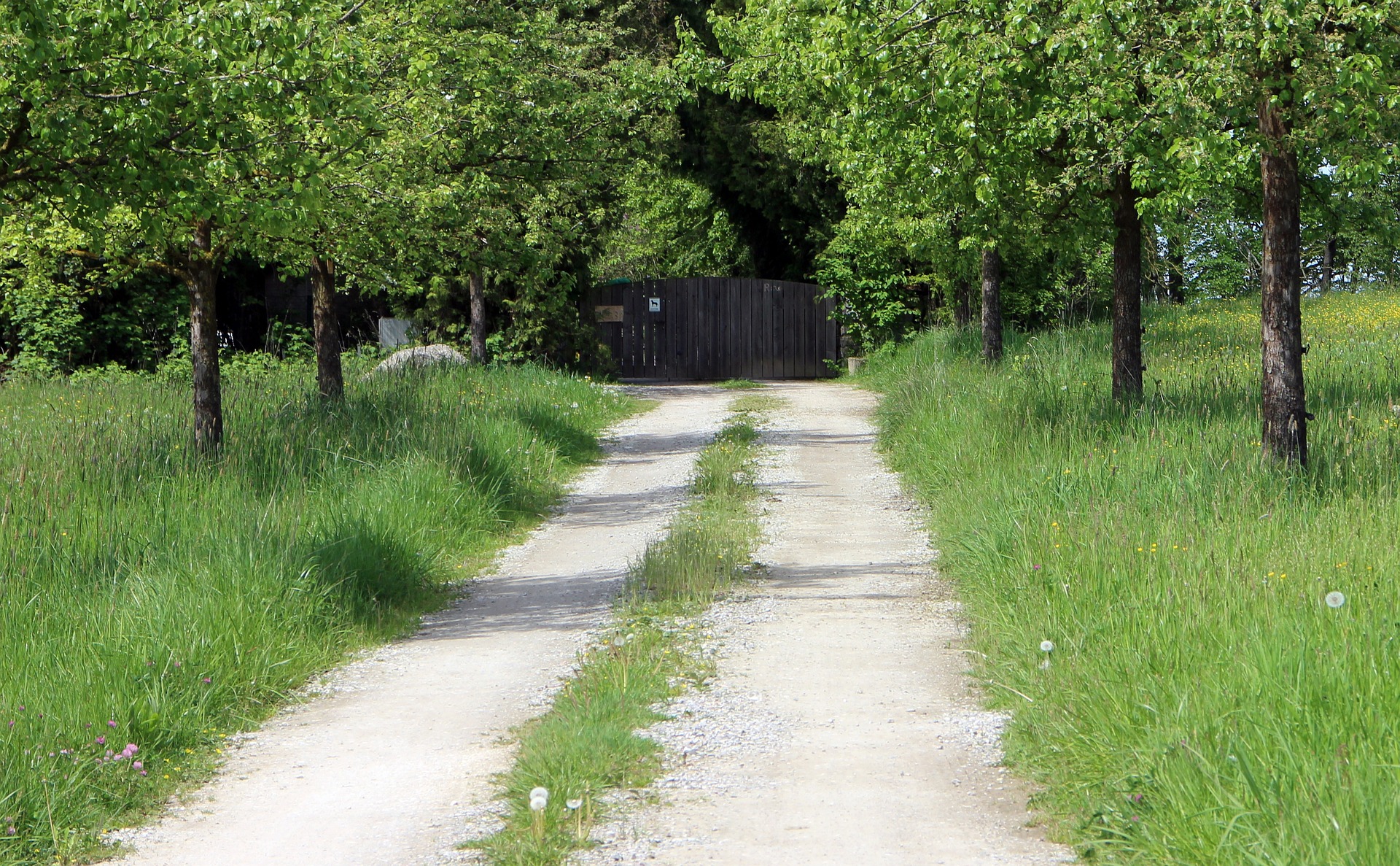
Right of Access to Property: Rights of Way, Neighbours and Repairs
Published By FJP Investment Editorial Team
Last updated: August 2026
A right of access to property can have a major effect on how a home, piece of land or development site can be used.
For some homeowners, it may be as simple as sharing a driveway with a neighbour. For others, access may involve crossing somebody else’s land to reach a garage, maintaining a wall from the neighbouring garden, or relying on a private road to reach their home.
These rights can also become extremely important when buying or selling property. A poorly understood right of way can affect development potential, parking, privacy and, ultimately, property value.
In many cases, the answer lies in the property’s title documents. In others, rights may have arisen through long-term use, implication or necessity.
This guide looks at rights of access, rights of way, easements, access to neighbouring land for repairs, blocked access and property deeds, with a particular focus on the law in England and Wales.
Important: Property access disputes can depend heavily on the precise wording of old deeds and the history of how land has been used. This article provides general information only and is not a substitute for legal advice.
What is a right of access to property?
A right of access generally gives somebody a legal entitlement to enter, cross or otherwise use another person’s land for a defined purpose.
One of the most common examples is a house that can only be reached by travelling along a driveway owned by a neighbouring property.
The owner of the house may not own the driveway, but their property may benefit from a legal right to use it.
Access rights can be extremely specific.
For example, a right might permit:
- access on foot;
- access with vehicles;
- use of a shared driveway;
- access to garages or parking;
- entry for maintenance or repairs; or
- access to pipes, drains and other services.
The exact wording and history of the right matter. A right to walk along a path does not automatically mean somebody has the right to drive along it.

What is the difference between a right of access, a right of way and an easement?
These expressions are often used interchangeably, but they are not quite the same thing.
An easement is a legal right enjoyed over somebody else’s land. A right of way is one type of easement.
A right of way normally concerns passing and repassing over land to travel from one place to another.
A broader right of access may include a right of way, but could also involve entering neighbouring land for a specific purpose rather than simply travelling through it.
Easements can cover matters other than access. They may include rights relating to drainage, utilities, support or other uses of neighbouring land.
We have looked at the subject in more detail in our separate guide explaining what an easement is.
Where do you find a right of access?
If you are trying to establish whether your property has a right of access, one of the first places to look is the property’s title information.
HM Land Registry records many legal easements affecting registered land.
The title register for the property that benefits from the right may contain wording referring to rights granted by an earlier conveyance, transfer or deed.
The title of the land being crossed may also contain details of rights that burden that property.
However, property rights can be complicated and the absence of simple wording in an online title register does not necessarily prove that no easement exists.
Some rights may arise through implication or long-term use and older rights can have different registration implications.
HM Land Registry’s current guidance confirms that legal easements may be recorded in the register and that express grants of qualifying easements over registered land generally need to be completed by registration.
Our homeowner’s guide to HM Land Registry explains the title register and title plan in more detail.
Public rights of way and private rights of way
It is important to distinguish between a public right of way and a private access right.
A public right of way allows members of the public to travel along a legally recognised route.
Different types of public right of way permit different uses:
| Type of public right of way | Typical permitted use |
|---|---|
| Footpath | Walking, including use of mobility scooters and powered wheelchairs |
| Bridleway | Walking, horse riding and cycling |
| Restricted byway | Walking, horse riding, cycling and non-motorised vehicles |
| Byway open to all traffic | May also permit motor vehicles |
Public rights of way are generally recorded on the definitive map maintained by the relevant local authority.
A private right of way, by comparison, usually exists for the benefit of a particular property or group of properties rather than the public as a whole.
For example, four houses may have a private right to use a lane owned by somebody else.
More information on public rights of way is available through GOV.UK guidance on using public rights of way.
How can a private right of access be created?
There are several ways in which an easement or private right of access may arise.
Express easement
An express easement is deliberately created, normally through a deed or as part of a property transfer.
This is often the clearest situation because the document may describe the route, permitted users, purpose and any conditions attached to the right.
Implied easement
In some circumstances, a right may be implied even though it was not expressly written into the conveyance.
Whether an implied easement exists is a legal question and can depend on the circumstances in which the land was originally divided and transferred.
Easement by necessity
An easement may sometimes arise through necessity where land would otherwise be inaccessible and the circumstances satisfy the legal requirements.
This is more restrictive than simply arguing that another route would be more convenient.
Prescriptive easement
A right can also potentially be acquired through long-term use. This is commonly known as acquiring an easement by prescription.
HM Land Registry states that prescriptive easements can arise through common law, the doctrine of lost modern grant or the Prescription Act 1832.
Whichever method is relied upon, the relevant use must generally have continued for at least 20 years.
Importantly, 20 years of use does not automatically guarantee that an easement exists.
The use relied upon generally needs to have been exercised “as of right” — broadly, without force, secrecy or permission — and the evidence must support the nature and extent of the right being claimed.
For example, somebody who has walked along a route for 20 years may not automatically have acquired a right to drive vehicles along it.
HM Land Registry provides detailed guidance in its Practice Guide 52 on easements claimed by prescription.
Does a right of access include vehicles?
Not necessarily.
This is one of the most important issues to check when buying property.
A deed might give a right to pass and repass on foot. Another might expressly include vehicles. Older wording may need to be interpreted in the context of the deed and relevant law.
The distinction can have major practical consequences.
A purchaser might assume that because a driveway exists they are entitled to drive along it, park on it or use it to access a new development.
That assumption may be wrong.
Similarly, an existing vehicular access serving one house does not necessarily mean that the same route can automatically be used to serve several newly constructed homes.
This is why access should be investigated carefully before purchasing land for development.
Can my neighbour enter my property without permission?
As a general principle, ownership of neighbouring land does not give somebody an automatic right to enter your property whenever they choose.
However, there are important exceptions.
Your neighbour may already have an easement or other legal access right contained in the title documents.
There may also be statutory rights that permit access in particular circumstances.
One of the most important examples involves essential repairs and maintenance.
Can a neighbour access my land to carry out repairs?
The Access to Neighbouring Land Act 1992 provides a mechanism through which a property owner may apply to the court for an access order where entry onto neighbouring land is necessary to carry out certain preservation works.
The legislation can cover work such as:
- maintenance, repair or renewal of a building or structure;
- repair or renewal of drains, sewers, pipes or cables;
- certain work to dangerous, diseased or damaged trees and hedges; and
- clearance or filling of certain ditches.
The fact that somebody wants to carry out work does not automatically entitle them to walk onto the neighbour’s property.
If permission cannot be agreed, the person seeking access may need to apply to the court.
The court considers whether the work is reasonably necessary for preservation of the property and whether it cannot be carried out, or would be substantially more difficult to carry out, without access to the neighbouring land.
The court can also consider the interference or hardship that an access order would cause to the neighbour.
This is therefore very different from assuming that a homeowner has an unrestricted right to enter next door simply because maintenance would be easier from that side.
What about access under the Party Wall etc. Act?
There are also circumstances where party wall procedures can give surveyors and workmen access to neighbouring property in connection with authorised works.
Government guidance states that, where the relevant party wall provisions apply, the neighbour must normally allow access during usual working hours after receiving the required notice. GOV.UK states that 14 days’ notice should normally be given except in an emergency.
Party wall rights are a separate legal issue from an ordinary private right of way, so property owners should not assume that one automatically creates the other.
Can somebody block a private right of way?
If a property benefits from a valid private right of way, the owner of the land being crossed should not substantially interfere with the lawful exercise of that right.
Disputes commonly arise because of:
- parked vehicles;
- locked or newly installed gates;
- fences;
- building work;
- stored materials; or
- changes to the width or route of the access.
Whether something amounts to unlawful interference will depend on the terms and practical exercise of the easement.
For example, the installation of a gate does not necessarily breach every right of way. The question may instead be whether the gate materially interferes with the person’s ability to exercise the access they are legally entitled to use.
Property owners should be extremely cautious about physically removing somebody else’s gate, barrier or property themselves.
If an access dispute cannot be resolved informally, professional legal advice should normally be taken before any direct action is attempted.
What happens if a right of way is used more heavily?
The existence of a right of way does not necessarily permit every conceivable level or type of use.
This can become particularly important when property is redeveloped.
Suppose a private driveway has historically served one house.
If that house is demolished and replaced by several properties, the increased number of vehicles using the route may lead to a dispute over whether the proposed use falls within the scope of the existing easement.
The answer depends on the wording of the original right and the legal principles applying to its use.
This is one reason why developers and investors should investigate access rights at an early stage rather than after planning permission or construction work has begun.
Who is responsible for maintaining a private right of way?
There is no single answer that applies to every private access.
The original deed may set out who must maintain the road, driveway or path and how costs are divided between the properties using it.
Sometimes several homes are required to contribute towards repairs.
In other cases, the deeds may say very little.
Disputes can arise over:
- resurfacing a shared driveway;
- repairing potholes;
- drainage;
- maintaining gates;
- cutting vegetation; and
- paying for major works.
Before purchasing a property with shared access, buyers should therefore ask their conveyancer not only whether a right exists but also what the documents say about maintenance and costs.
Can a right of access affect property value?
Yes.
Access can have a significant impact on both usability and value.
A property with clear legal vehicular access is likely to be more attractive than an otherwise identical property where access is uncertain or disputed.
Equally, owning land that is heavily burdened by access rights benefiting neighbouring properties can affect privacy and restrict how the land can be developed.
For development sites, access can be particularly important because a site may have significant theoretical development value but still be difficult to use if appropriate legal and physical access cannot be established.
Jamie Johnson, CEO of FJP Investment, explains: “Access is one of those things people can easily take for granted when looking at property. But if you’re buying land or looking at development potential, it can completely change what is actually possible. It is something that needs to be understood before the deal is done, not afterwards.”
Buying land from a neighbour and access rights
Access rights also deserve particular attention when purchasing a section of somebody else’s land.
Dividing land can create entirely new access requirements.
For example, the seller may need to reserve a right over the section being sold, or the buyer may require a right across land that the seller is retaining.
The transfer documents should therefore be drafted carefully to make clear who can use the access, for what purpose, with what types of vehicles and who is responsible for maintenance.
Our guide to buying land from a neighbour covers the wider process in more detail.
What should you check before buying a property with shared access?
If a property depends on shared or neighbouring access, there are several practical questions worth raising during conveyancing.
- Who actually owns the driveway, lane or access road?
- Does the property have an express legal right to use it?
- Does the right allow pedestrians, vehicles or both?
- Does it allow access to garages and parking areas?
- Are there restrictions on how the access can be used?
- Who is responsible for repair and maintenance?
- Are maintenance costs shared?
- Have there been previous disputes?
- Are there gates or other physical restrictions?
- Could future development increase the use of the access?
Do not rely solely on the fact that an access route physically exists.
The legal right to use it is what matters.
What should you do if a neighbour disputes your right of access?
Access disputes can become expensive very quickly, particularly where relationships between neighbours have already deteriorated.
Before assuming that one side is clearly right or wrong, it is sensible to establish exactly what legal rights exist.
This may involve reviewing:
- the title registers;
- historic conveyances and transfers;
- plans;
- old deeds;
- evidence of how the access has historically been used; and
- any previous agreements or correspondence between owners.
If a right has been used for many years but does not appear clearly in the deeds, specialist advice may be necessary to establish whether a prescriptive or implied easement exists.
Where a genuine dispute remains, a solicitor specialising in property or land law can advise on possible remedies.
Depending on the circumstances, those remedies can potentially include negotiation, declarations as to the existence or scope of a right, injunctions or damages.
Litigation should not normally be the first instinct in a neighbour dispute, but nor should somebody surrender an important property right without first understanding their legal position.
Frequently asked questions about rights of access
What does right of access to property mean?
A right of access gives a person or property a legal entitlement to enter, cross or use somebody else’s land for a particular purpose. The precise extent of the right depends on how it was created and its wording or historic use.
Is a right of access the same as a right of way?
Not always. A right of way is a type of access right that generally permits somebody to pass and repass over land. An access right may potentially cover other purposes as well.
Can my neighbour walk across my property?
Only if they have a legal basis for doing so, such as a private right of way, another easement, statutory authority or your permission. Simply owning neighbouring land does not ordinarily create an unrestricted right to enter your property.
Can my neighbour come onto my land to repair their house?
They should normally seek your agreement first. Where agreement cannot be reached, the Access to Neighbouring Land Act 1992 may allow them to apply to the court for an access order for certain preservation works where the statutory requirements are satisfied.
Can I block a right of way over my property?
A landowner should not substantially interfere with somebody else’s valid right of way. Whether a particular gate, parked vehicle or other obstruction unlawfully interferes with the right depends on the circumstances and terms of the easement.
Can you gain a right of access after 20 years?
A private easement may potentially arise by prescription after at least 20 years of qualifying use. However, the right is not created simply because 20 years have passed. The use and surrounding circumstances must satisfy the relevant legal requirements.
Does a pedestrian right of way allow cars?
Not automatically. The scope of a right depends on the wording of the grant or the use through which the right arose. A right exercised only on foot should not simply be assumed to include vehicles.
Are rights of way shown on title deeds?
Many express legal easements are recorded in HM Land Registry title information or referred to in historic deeds. However, not every possible right will necessarily appear as a simple entry, particularly where a right is claimed through implication or prescription.
Who pays to maintain a shared driveway?
The first place to check is the relevant deed or transfer. It may specify responsibility and how costs are shared. Where the documents are unclear, the position can be more complicated and professional advice may be appropriate.
Final thoughts
A right of access to property can appear straightforward until somebody tries to block it, change its use, develop the land or sell the property.
That is often when the precise wording suddenly becomes extremely important.
For homeowners, the key is to understand exactly what rights benefit their property and what rights neighbouring properties may have over their land.
For property investors and developers, access should form part of the due-diligence process from the outset.
A route that appears perfectly usable on a site visit may not provide the legal access required for the buyer’s plans.
Check the title documents, understand whether the access is pedestrian or vehicular, investigate maintenance obligations and ask questions where anything is unclear.
Getting those answers before purchasing a property is considerably easier than trying to resolve an access dispute afterwards.
This article provides general information about property access rights and should not be regarded as legal advice. Rights of way and easements are highly fact-specific, and professional advice should be sought where a particular right is disputed or unclear.